Maximizing Commercial Impact: The Comprehensive Guide to Rotatable Digital Signage Kiosks in the Modern B2B Landscape
Introduction: The Evolution of Visual Communication
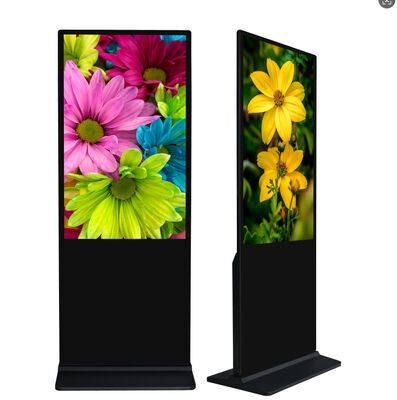
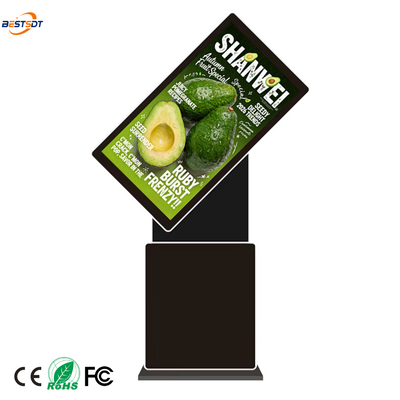
In the fast-paced world of commercial advertising, the ability to capture attention is the ultimate currency. For decades, businesses relied on static posters and lightboxes to convey their messages. However, as the digital age matured, the transition to LCD and LED displays became inevitable. Today, we are witnessing a new frontier in visual communication: the Rotatable Digital Signage Kiosk. This innovative technology is not just an upgrade; it is a fundamental shift in how brands interact with their audience in retail malls, airports, corporate hubs, and exhibition centers. For B2B buyers—wholesalers, distributors, and project managers—understanding the strategic value of rotatable displays is crucial for staying ahead in a saturated market.
Section 1: Why "Rotation" is the New Standard for Commercial Displays
The most distinctive feature of the rotatable kiosk is its ability to switch between portrait and landscape modes seamlessly. But why does this matter for a professional buyer?
1.1 Content Versatility and Optimization
In the current digital ecosystem, content comes in all shapes and sizes. Social media platforms like TikTok and Instagram have popularized vertical (portrait) video formats, while cinematic advertising and traditional web content remain horizontal (landscape). A fixed-orientation screen forces a brand to choose one or the other, often resulting in wasted screen real estate or awkwardly cropped visuals. A rotatable signage kiosk, particularly those in 43-inch, 55-inch, and 65-inch sizes, allows users to adapt the hardware to the content, ensuring 100% utilization of the pixel area.
1.2 Space Efficiency in Retail Layouts
Retail environments are often constrained by floor plans. A vertical display occupies a smaller footprint, making it ideal for narrow corridors or beside escalators. Conversely, a horizontal display is perfect for wider atriums or as an interactive tabletop. The flexibility to rotate the screen 90 degrees means that a single SKU can serve multiple roles within a store’s layout, simplifying inventory management for large-scale distributors.
Section 2: Technical Deep Dive: Engineered for Industrial Reliability
Professional B2B buyers prioritize longevity and performance over flashy consumer-grade features. When evaluating a rotatable advertising kiosk, several technical pillars define its commercial value.
2.1 The Display Panel: Beyond Consumer Expectations
A commercial kiosk must withstand 24/7 operation, a feat impossible for standard televisions. Premium kiosks utilize A+ grade panels from industry leaders like LG and BOE. These panels are engineered to prevent "image burn-in" and maintain color consistency even after years of continuous use. With 1080P Full HD or 4K Ultra HD resolution and industrial-grade brightness (typically 350-500 nits, and up to 2000 nits for semi-outdoor use), these screens remain visible even under harsh fluorescent mall lighting.
2.2 The Rotation Mechanism: Precision Engineering
The hinge is the most critical mechanical component. A high-quality rotatable signage kiosk features an industrial precision bearing system. Whether it is a motorized rotation triggered by software or a smooth manual adjustment, the mechanism must be rated for thousands of cycles. Furthermore, the internal cabling must be routed through a specialized anti-torsion conduit to prevent signal degradation or wire fatigue—a common failure point in low-end units.
2.3 Interactive Touch Technology: Enhancing Engagement
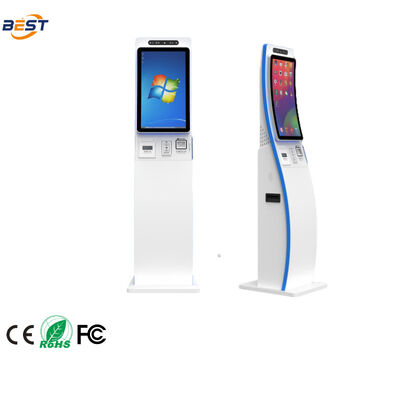
Modern signage is no longer a one-way broadcast. The integration of 10-point PCAP (Projected Capacitive) touch technology transforms a passive screen into an interactive terminal. For B2B projects, this means the kiosk can serve as a wayfinding map, a self-service ordering point, or a data collection hub. The touch sensitivity must be precise (<5ms response time) and protected by tempered glass with a Mohs hardness of 7H to resist scratching in high-traffic areas.
Section 3: The Power of Dual-OS and Cloud Management
Hardware is only as effective as the software that drives it. The modern rotatable kiosk often supports a dual-system architecture.
3.1 Android vs. Windows: Choosing the Right Path
- Android OS: Favored for its cost-effectiveness and ease of use with lightweight CMS apps. It is ideal for standardized advertising networks.
- Windows OS: Utilizing modular OPS (Open Pluggable Specification) PCs, Windows systems are necessary for high-performance applications, 3D rendering, and integration with enterprise-level databases. The ability to offer both options allows distributors to cater to a wider range of software requirements, from simple retail loops to complex government wayfinding systems.
3.2 Remote Content Management (CMS)
For a B2B operator managing hundreds of units across multiple cities, physical updates via USB are obsolete. A robust rotatable kiosk must support a Cloud-based CMS. This allows for real-time scheduling, remote diagnostics, and split-screen management. An operator in London can update a seasonal promotion for a kiosk in a Dubai mall with a single click, ensuring global brand consistency.
Section 4: Industry-Specific Applications and Case Studies
Understanding where these units are deployed helps buyers visualize the ROI (Return on Investment).
4.1 High-End Retail and Luxury Showrooms
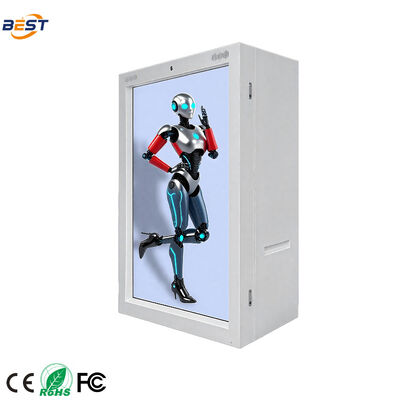
In fashion retail, the rotatable kiosk is a game-changer. Brands can display "Life-Size" models in portrait mode, allowing customers to see the fit and drape of clothing as if looking into a mirror. When shifted to landscape, the kiosk can show high-production runway videos or behind-the-scenes brand stories.
4.2 Transportation Hubs: Airports and Stations
Airports use these kiosks for a dual purpose. During peak travel times, they act as horizontal wayfinding maps or flight information boards. During downtime, they rotate to vertical mode to display high-revenue advertisements for luxury goods or local services. The 24/7 reliability is non-negotiable here, where downtime results in immediate passenger confusion and lost revenue.
4.3 Corporate Lobbies and Smart Offices
Modern corporations use rotatable displays for visitor management and internal communication. A kiosk in the lobby can welcome guests with a vertical corporate video and then be rotated by a receptionist to act as a horizontal interactive directory for a large office complex.
Section 5: The B2B Buyer’s Checklist: Procurement Best Practices
When sourcing from manufacturers, professional buyers should evaluate the following criteria to ensure long-term project success.
5.1 Certification and Compliance
Global trade requires adherence to safety standards. Ensure the kiosks carry CE, FCC, RoHS, and UL certifications. For specific markets like the EU, energy efficiency ratings are becoming increasingly important.
| Контактное лицо : |
Mr. Jack Zheng |
| Телефон : |
+86 18682320109 |


 Ваше сообщение должно содержать от 20 до 3000 символов!